
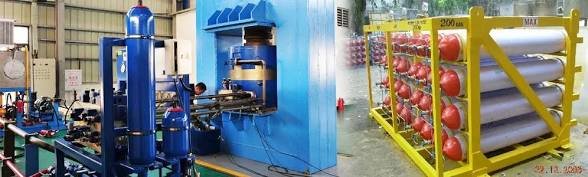
CNG has been used as a vehicle fuel in Pakistan for many years. Because compressed natural gas is stored at high pressure, the condition, approval, installation, and testing of a CNG cylinder are important parts of vehicle safety. Choosing a cylinder should never be treated as an ordinary vehicle-accessory purchase.
A safe approach begins with one simple principle: do not compromise on cylinder quality, certification, testing, or professional installation.
The Oil and Gas Regulatory Authority (OGRA) advises CNG vehicle owners to use approved, brand-new, seamless vehicle cylinders manufactured according to the prescribed standard and to purchase or install them through authorised and licensed CNG facilities. OGRA also warns against using cylinders intended for other gases or installing cylinders through unauthorised roadside workshops.
For people researching CNG cylinder safety in Pakistan, this article explains the major points to check before purchasing or replacing a cylinder, why testing matters, and how CNG safety fits into a broader fire-safety plan.
Why CNG Cylinder Safety Matters
CNG is compressed natural gas. Unlike ordinary fuel stored as a liquid at atmospheric pressure, vehicle CNG is stored under high pressure inside specially designed cylinders.
That means the cylinder must be manufactured, installed, inspected, and maintained for its intended purpose.
A damaged, unsuitable, incorrectly installed, or improperly tested cylinder can create serious safety risks.
For this reason, buyers should not make their decision based only on:
- Price
- Cylinder size
- Brand appearance
- Availability
- A seller’s verbal claims
- The age of the vehicle
Safety documentation and approval are much more important.
Buy Only an Approved CNG Cylinder
One of the first things to check is whether the cylinder is approved for CNG vehicle use.
OGRA specifically advises vehicle owners to use approved brands and new seamless CNG cylinders manufactured according to the prescribed standard. It also advises buyers to satisfy themselves about the cylinder’s genuineness and fitness before purchase and installation.
This is important because not every gas cylinder is designed for CNG.
A cylinder designed for another gas or application should not simply be substituted because it looks similar.
Before purchasing, ask the authorised supplier or installer for appropriate documentation confirming that the cylinder is approved for its intended application.
Check the Cylinder’s Intended Use
Cylinders are manufactured for specific purposes.
A CNG vehicle cylinder is designed for compressed natural gas storage in vehicles. Other cylinders may be designed for LPG, oxygen, nitrogen, acetylene, or other gases.
These applications are not interchangeable.
OGRA explicitly warns that LPG, oxygen, nitrogen, and acetylene cylinders are not intended for CNG use.
This is one of the most important points for buyers to understand.
Never assume that a cylinder is suitable for CNG simply because it is a pressure cylinder.
Look for a Seamless Construction
Cylinder construction is another important consideration.
OGRA’s safety notice states that approved vehicle cylinders should be seamless and warns against cylinders fabricated by joining two halves with threads or welding.
A buyer should therefore avoid products that do not have clear evidence of proper manufacture and approval.
If a seller cannot provide reliable information about the cylinder’s manufacturer, standard, approval, and condition, it is better to seek advice from an authorised professional rather than making an uncertain purchase.
Check the Cylinder’s Age and Testing Status
CNG cylinders are not products that should be treated as maintenance-free.
Testing is an important part of long-term safety.
An OGRA document concerning periodic testing of CNG vehicle cylinders states that under the CNG Rules, 1992 and the relevant Standard Code of Practice, each CNG cylinder is required to be retested after five years of use. The document refers to testing in accordance with the applicable standard.
Therefore, before buying a cylinder, buyers should ask about:
- Manufacturing date
- Testing history
- Retesting status
- Relevant certification
- Cylinder identification information
- Whether the cylinder is new or previously used
For a used cylinder, documentation and professional inspection become particularly important.
Why a Used Cylinder Requires Extra Caution
A used CNG cylinder may have experienced conditions that are not immediately visible.
It may have been exposed to:
- Physical impact
- Heat
- Corrosion
- Improper storage
- Vehicle accidents
- Previous damage
- Unauthorised modifications
A cylinder can appear acceptable externally without providing enough information about its safety condition.
OGRA specifically warns against installing used cylinders that have been burned or damaged, noting that such cylinders can be weakened and may lead to serious accidents.
For this reason, buyers should not rely solely on appearance.
Check for Physical Damage
Before any cylinder is accepted for installation, its condition should be assessed by an appropriately qualified professional.
Visible concerns can include:
- Deep dents
- Severe corrosion
- Signs of fire exposure
- Cracks or other damage
- Unauthorised alterations
- Damaged identification markings
A buyer should not attempt to repair, modify, cut, weld, or otherwise alter a CNG cylinder.
Pressure equipment requires appropriate technical expertise and approved procedures.
If a cylinder appears damaged, the safest approach is to stop the purchase or installation process and obtain professional advice.
Buy From an Authorised Facility
Where a CNG cylinder is being installed or replaced, the facility performing the work matters just as much as the product itself.
OGRA advises vehicle owners not to install CNG kits or cylinders through unauthorised roadside conversion workshops or outlets.
An authorised facility can help ensure that the cylinder and associated equipment are handled according to applicable requirements.
This also creates a better opportunity for the vehicle owner to receive appropriate documentation and information about future inspection or testing.
Do Not Rely on the Lowest Price
A very low price can be attractive, but CNG cylinder safety should not be treated as a bargain-hunting exercise.
A cheaper product may not provide the same assurance regarding:
- Manufacturing quality
- Certification
- Traceability
- Testing
- Installation
- After-sales support
The cost of a cylinder should therefore be considered alongside its safety documentation and professional installation.
When dealing with high-pressure equipment, saving money by choosing an uncertain product can create unnecessary risk.
Check Documentation Before Installation
Documentation is an important part of responsible purchasing.
Depending on the product and applicable requirements, buyers should ask the authorised supplier about relevant documents showing:
- Manufacturer information
- Cylinder identification
- Manufacturing date
- Applicable standard
- Approval information
- Testing or inspection status
- Installation details
Do not accept unclear paperwork simply because a seller says that the cylinder is approved.
If there is uncertainty, verify the information through the authorised supplier, installer, or relevant regulatory authority.
CNG Safety Is More Than the Cylinder
A cylinder is only one component of a vehicle’s CNG system.
Other parts can include the CNG kit, valves, lines, fittings, regulators, and other equipment.
The entire system needs to be appropriate for the vehicle and installed correctly.
A high-quality cylinder cannot compensate for unsafe or unauthorised installation elsewhere in the system.
This is why buyers should consider the complete installation rather than focusing on the cylinder alone.
Avoid Unauthorised Modifications
High-pressure gas equipment should not be modified casually.
Drilling, welding, cutting, changing components, or making other unauthorised alterations can affect the safety of the system.
Vehicle owners should use appropriately qualified and authorised professionals for CNG-related work.
If a modification is suggested, ask whether it is permitted under the applicable requirements and whether it has been approved by the appropriate technical authority.
Why Proper Installation Matters
Even a compliant cylinder can become part of an unsafe system if it is installed incorrectly.
Installation should therefore be carried out at an authorised facility by people with the appropriate technical qualifications and equipment.
The position and mounting of the cylinder should be consistent with applicable vehicle and safety requirements.
This is especially important because a vehicle experiences vibration, movement, temperature changes, and road conditions during normal use.
CNG Cylinders and Passenger Safety
The location of a CNG cylinder within a vehicle can be particularly important.
OGRA has previously addressed concerns involving CNG/LPG cylinders installed inside passenger compartments of public service vehicles. In a 2019 communication, OGRA referred to safety concerns and requested enforcement relating to such installations in public service vehicles.
This demonstrates why vehicle owners should not assume that any cylinder location is acceptable.
Passenger vehicles, public transport, school transport, and other vehicle categories can have specific requirements.
Owners should follow the applicable rules for their particular vehicle rather than copying an arrangement from another vehicle.
School and Passenger Transport Require Extra Attention
Vehicles carrying children or large numbers of passengers require careful attention to safety.
OGRA’s 2019 communication specifically raised safety concerns regarding CNG/LPG cylinders in public service vehicles and school vans.
Parents and guardians can therefore ask transport providers whether vehicles are appropriately inspected and maintained.
The goal is not to make technical decisions without expertise. Instead, families should expect transport operators to follow applicable safety requirements and use properly maintained vehicles.
What About CNG Stations?
CNG stations themselves are subject to regulatory and technical requirements.
OGRA explains that CNG station licensing involves applicable approvals, safety and technical standards, and inspection arrangements. Its published material also identifies approved third-party inspection processes for CNG works and installations.
This means consumers should use properly licensed CNG stations rather than informal or unauthorised sources.
OGRA maintains information relating to operational CNG stations, CNG licences, approved cylinders, approved kits, and other CNG-sector information through its official resources.
Refuelling Safety
CNG refuelling should take place at an appropriate, authorised facility.
OGRA’s safety notice states that vehicle owners should not request refuelling beyond the applicable maximum pressure of 200 bar and advises reporting stations dispensing CNG at excessive pressure.
Vehicle owners should follow the station’s safety instructions and avoid behaviour that could create additional hazards during refuelling.
If a problem is suspected with the vehicle’s CNG system, it should be assessed by an appropriate professional rather than ignored.
Recognising When Professional Inspection Is Needed
Vehicle owners should seek professional assessment when there is concern about the CNG system or cylinder.
Examples include:
- The cylinder has been involved in an accident.
- The cylinder shows signs of significant damage.
- The cylinder has been exposed to fire or extreme heat.
- Testing information is missing or overdue.
- The cylinder’s identity or documentation is unclear.
- Unauthorised modifications are suspected.
- The vehicle’s CNG equipment has developed a fault.
Do not attempt to diagnose or repair high-pressure gas equipment without the required expertise.
CNG Safety and Fire Prevention
CNG cylinder safety is closely connected with broader fire prevention.
A vehicle containing compressed natural gas should be treated as equipment requiring proper inspection and maintenance. Fire safety is not only about extinguishing a fire after it starts; prevention and early warning are equally important.
For buildings, offices, workshops, parking facilities, and commercial properties, fire protection can include appropriate detection, alarms, emergency planning, and firefighting equipment.
The Pakistan Engineering Council lists the Building Code of Pakistan Fire Safety Provisions 2016 among Pakistan’s published building codes and standards.
The appropriate fire protection measures depend on the building, occupancy, hazards, and applicable requirements.
The Role of a Fire Alarm System
A fire alarm system does not replace safe CNG equipment, but it can provide an important layer of early warning where a suitable system is required.
A properly designed system can include appropriate detection devices, alarm notification, control equipment, and other components according to the property’s needs.
Businesses researching a fire alarm system in Pakistan should consider factors such as building layout, occupancy, fire hazards, applicable requirements, system design, maintenance, and professional installation.
The important point is that CNG safety and fire alarm protection address different parts of an overall safety strategy. A compliant cylinder helps manage the gas-storage risk, while a suitable fire detection and alarm arrangement can help provide early warning in a building or facility.
What to Check Before Buying a CNG Cylinder
A simple checklist can help buyers ask the right questions.
1. Is it specifically approved for CNG vehicle use?
Do not assume that another type of gas cylinder is suitable.
2. Is it new and from a reliable source?
OGRA advises the use of approved, brand-new seamless vehicle cylinders.
3. Is the manufacturer information clear?
The product should have appropriate identification and documentation.
4. Is the manufacturing date available?
Age matters because CNG cylinders require periodic testing.
5. Is testing information available?
Ask about the cylinder’s testing and retesting status.
6. Is there any evidence of damage?
A damaged or fire-exposed cylinder should not be accepted without appropriate professional assessment.
7. Is the installer authorised?
Avoid unauthorised roadside conversion workshops.
8. Is the complete CNG system being checked?
The cylinder should not be considered separately from the rest of the vehicle’s CNG equipment.
9. Does the installation comply with applicable requirements?
Ask the authorised installer about the requirements that apply to the particular vehicle.
10. Is there reliable after-sales support?
Future inspection, testing, and maintenance are part of responsible ownership.
Why Periodic Retesting Should Not Be Ignored
Buying a safe cylinder is only the beginning.
CNG cylinders remain subject to service conditions over time. Regular testing helps identify whether equipment continues to meet applicable safety requirements.
OGRA’s published material on periodic testing states that CNG vehicle cylinders are required to be retested after five years under the referenced CNG rules and Standard Code of Practice.
Vehicle owners should keep track of the cylinder’s testing status and follow the current applicable requirements.
If the testing history is unclear, professional advice should be obtained rather than assuming that the cylinder remains acceptable.
Choosing Safety Over Convenience
CNG can provide practical benefits as a vehicle fuel, but high-pressure equipment requires responsible ownership.
The safest purchasing decision is not necessarily the fastest or cheapest one.
Before buying or replacing a cylinder, take time to verify its approval, construction, manufacturer, age, testing status, and installation arrangements.
Most importantly, use authorised professionals and follow applicable regulatory requirements.
Conclusion
CNG cylinder safety begins before the cylinder is installed. Buyers should verify that the product is specifically approved for CNG vehicle use, comes from a reliable source, has appropriate identification and documentation, and meets applicable testing requirements.
OGRA advises the use of approved, new, seamless CNG vehicle cylinders and warns against unsuitable cylinders, damaged cylinders, and unauthorised installation. It also states that CNG vehicle cylinders require periodic retesting under the referenced rules and standards.
For businesses, workshops, offices, parking areas, and other properties, CNG safety should also form part of a broader fire-prevention strategy. Appropriate fire detection and alarm arrangements can provide another layer of protection where required. A properly planned fire alarm system in Pakistan should be selected according to the building’s actual risks, occupancy, layout, and applicable requirements.
For information about fire alarm and fire protection services in Pakistan, visit Flame Defender.
The key lesson is simple: never compromise on the quality, approval, testing, or professional installation of a CNG cylinder. Safety should come before convenience and price.
Frequently Asked Questions
1. What should I check before buying a CNG cylinder?
Check that the cylinder is specifically approved for CNG vehicle use, is from a reliable authorised source, has clear identification and documentation, and meets applicable manufacturing and testing requirements.
2. Can an LPG cylinder be used for CNG?
No. CNG and LPG cylinders are designed for different applications. OGRA specifically warns that LPG and other non-CNG cylinders should not be used for CNG.
3. How often does a CNG cylinder need retesting?
OGRA’s published material states that CNG vehicle cylinders are required to be retested after five years under the referenced CNG Rules, 1992 and Standard Code of Practice. Owners should also follow any current applicable requirements and professional testing guidance.
4. Should I buy a used CNG cylinder?
Extra caution is required with used cylinders because their previous service history and condition may not be obvious. A cylinder with unknown history, damage, fire exposure, or unclear testing records should not be accepted without appropriate professional assessment.
5. Is a fire alarm system useful around CNG-related facilities?
A suitable fire detection and alarm system can provide early warning as part of a broader fire-safety strategy. The appropriate system depends on the property’s hazards, layout, occupancy, and applicable requirements. It does not replace compliant CNG equipment, professional inspection, or safe operating practices.